
15 June 2026
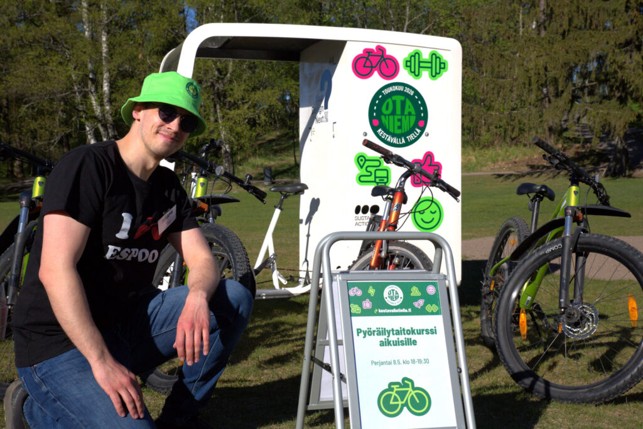
As part of its efforts to promote sustainable urban mobility, the City of Espoo recently organised the “Otaniemi on a Sustainable Path” theme month, bringing together local stakeholders, businesses, researchers, and residents to explore and test innovative mobility solutions.
The initiative was coordinated by the City of Espoo and involved several projects and organisations, including MOBILITIES FOR EU, SOLMU, Cycle4Climate, Visit Espoo, Aalto University, Länsimetro, VTT, and local businesses. Together, they transformed Otaniemi into a living mobility hub where sustainable transport solutions could be demonstrated, discussed, and experienced in real-life conditions.
Throughout the month, participants took part in a variety of events, pilots, and service demonstrations addressing sustainable mobility from multiple perspectives. Companies had the opportunity to test their solutions in a real urban environment and gather direct user feedback, while residents and local stakeholders were encouraged to explore new mobility options and contribute to ongoing discussions.
One of the highlights was the Future of Transport Demo Day at Dipoli, which brought together companies, city representatives, researchers, and development projects to showcase innovative mobility services and technologies being developed across the Helsinki metropolitan area.
The initiative demonstrated the value of collaboration in advancing sustainable mobility. Key lessons learned included the importance of active stakeholder engagement, strong communication, and user-centred pilots. The activities also highlighted that ease of use, accessibility, and perceived safety remain important factors influencing mobility choices.
Beyond raising awareness, the theme month strengthened cooperation between local stakeholders and provided valuable insights into how sustainable mobility solutions perform in practice. It also helped bring sustainable transport closer to everyday life by lowering the threshold for residents and workers to try new services and mobility options.
Building on these experiences, the partners plan to further develop the concept by strengthening partnerships, making use of the collected feedback, and exploring opportunities to apply the model to other sustainability topics in the future.
Through initiatives such as “Otaniemi on a Sustainable Path”, Espoo continues to demonstrate how collaboration, experimentation, and community engagement can support the transition towards more sustainable and people-centred urban mobility.
© 2026 Mobilities for EU
Social Media


Project Coordinator
Julia Vicente Gómez, CARTIF
julvic@cartif.es
Main Press Contact
Rebecca Sinai, Steinbeis Europa Zentrum
rebecca.sinai@steinbeis-europa.de


This website exists in the context of the MOBILITIES FOR EU project which is co-financed under the Horizon Europe research and innovation programme under grant agreement No 101139666.